

Best Air Conditioners for Apartments in NYC
A hot Manhattan night exposes every weakness in an apartment cooling plan: the bedroom unit rattles, the living room never catches up, and opening a window brings in more street noise than relief. The best air conditioners for apartments are not always the biggest units or the least expensive ones. They are the systems that fit your space, your building rules, your electrical capacity, and the way you actually live.
For NYC residents, choosing an air conditioner can involve more than comparing BTUs. Co-op boards, condo policies, window dimensions, facade rules, drainage concerns, and installation safety all matter. A unit that looks right on paper can become a frustrating purchase if it is too loud for a bedroom, too heavy for an older window, or not permitted by the building.
Best Air Conditioners for Apartments: Start With the System Type
Most apartment cooling decisions come down to four options: window units, portable units, through-the-wall units, and ductless mini-splits. Each can be the right answer under the right conditions.
Window air conditioners for efficient room-by-room cooling
For many renters and apartment owners, a properly sized window air conditioner remains the best value. It removes heat directly outdoors, leaves floor space open, and generally cools more efficiently than a portable model with comparable listed capacity. Modern inverter window units can also run at lower speeds once the room reaches the set temperature, which helps reduce noise and energy use.
Window units work especially well when you need to cool one defined area, such as a bedroom or a studio apartment. They are also practical when a building does not allow exterior modifications beyond a safely installed window unit.
The trade-off is installation. A unit must be secured correctly, supported as required, and positioned so condensate drains safely outside. In New York City, improper installation can create a real safety risk for people below. Never assume that a bracket, sash lock, or window opening is adequate without checking the manufacturer instructions and your building's policies.
Portable air conditioners when window installation is not possible
Portable air conditioners can be useful when your windows cannot accept a traditional unit, your landlord prohibits window installations, or you need cooling that can move between rooms. They are often easy to purchase and set up, but they are rarely the strongest choice for serious summer cooling.
A single-hose portable unit uses indoor air to exhaust heat outside, which can pull warm air back into the apartment through gaps around doors and windows. Dual-hose models are usually a better portable option because they reduce that negative-pressure effect. Even then, expect more operating noise and less efficiency than a good window unit.
Choose a portable unit for a temporary need or a difficult installation situation, not because it is automatically easier. Check whether it requires periodic draining in humid weather, and make sure the hose kit seals tightly in the window opening.
Through-the-wall units for apartments built for them
Some prewar buildings, co-ops, and managed properties have existing wall sleeves designed for air conditioners. A through-the-wall unit can be an excellent fit in these spaces because it does not block a window and can provide stable, long-term room cooling.
This option is not interchangeable with a window unit. Through-the-wall equipment has a different cabinet design and needs the correct sleeve dimensions, support, drainage arrangement, and weather sealing. Putting a window AC into a wall sleeve can damage the equipment, reduce performance, and create water intrusion issues.
If your apartment already has a sleeve, measure it carefully and have a professional confirm the unit type before ordering. Reusing an existing sleeve is often straightforward, but only when the new equipment is compatible.
Ductless mini-splits for quiet, long-term comfort
A ductless mini-split is often one of the best air conditioners for apartments when quiet operation, energy efficiency, and whole-apartment comfort are the priorities. These systems use an outdoor condenser and one or more slim indoor air handlers. They can cool separate rooms independently, avoid the bulk of window equipment, and provide much more consistent comfort than a collection of standalone units.
Mini-splits are typically a stronger investment for apartment owners than renters because installation requires building approval and exterior equipment placement. In a condo or co-op, the board may have rules about condensers, line-set routing, facade penetrations, roof access, condensate drainage, and installation hours.
The upfront cost is higher, but a carefully designed system can make sense for a renovated apartment, a top-floor home with heavy sun exposure, or a space where several window units would be disruptive. Many models also provide heat, which can be valuable during shoulder seasons when central building heat is not yet operating.
Getting the Size Right Matters More Than Oversizing
An oversized air conditioner may cool the room quickly but shut off before it removes enough humidity. The result can feel clammy, uneven, and uncomfortable. An undersized unit will run constantly, struggle during heat waves, and put unnecessary stress on its components.
As a general starting point, a small bedroom may need roughly 5,000 to 6,000 BTUs, while a larger bedroom or compact studio may need 8,000 to 10,000 BTUs. Open living areas often need more. But square footage is only part of the picture. Top-floor apartments, west-facing windows, tall ceilings, large glass exposures, kitchen heat, poor insulation, and multiple occupants all raise the cooling load.
The most reliable approach is to assess the actual room conditions. In NYC apartments, two rooms with the same dimensions can have very different needs depending on sun exposure and building construction. A professional consultation is particularly worthwhile before purchasing a mini-split or replacing several aging units.
What NYC Apartment Residents Should Check Before Buying
Start with the building. Your lease, house rules, superintendent, managing agent, or board can tell you whether window units are allowed, whether brackets are mandatory, and whether installation must be completed by an insured contractor. Some buildings restrict visible equipment on certain elevations or require specific installation dates.
Then check the electrical requirements. Small window units commonly use a standard 115-volt outlet, but larger units and many through-the-wall models may need a dedicated circuit or a different voltage. Avoid extension cords and power strips. An air conditioner draws substantial power, and an overloaded circuit can trip breakers or create a fire hazard.
Noise deserves equal attention. A lower sound rating is especially valuable in bedrooms, home offices, and tightly packed buildings where a noisy compressor can affect neighbors. Inverter-driven models tend to be quieter because they do not repeatedly blast on and off at full power.
Finally, consider drainage. Air conditioners remove moisture from the air, and that water has to go somewhere. A window unit should tilt slightly outward according to the manufacturer guidance, while a mini-split needs a properly routed condensate line. Water dripping onto sidewalks, neighboring windows, or building surfaces can lead to complaints and damage.
Features Worth Paying For
Not every feature changes comfort, but a few are genuinely useful in apartment living. Variable-speed or inverter technology can improve efficiency and reduce noise. A programmable thermostat or Wi-Fi control lets you avoid cooling an empty apartment all day. A dedicated dehumidification mode helps during sticky weather, though it is not a replacement for proper sizing.
Look for washable filters that are easy to access, particularly if you have pets or live near busy streets. Clean filters improve airflow and help the unit cool without working as hard. For households with allergy or indoor-air concerns, remember that an air conditioner filter is mainly designed to protect the equipment. It may capture larger particles, but it is not a complete air-cleaning solution.
When a Repair, Replacement, or Upgrade Makes More Sense
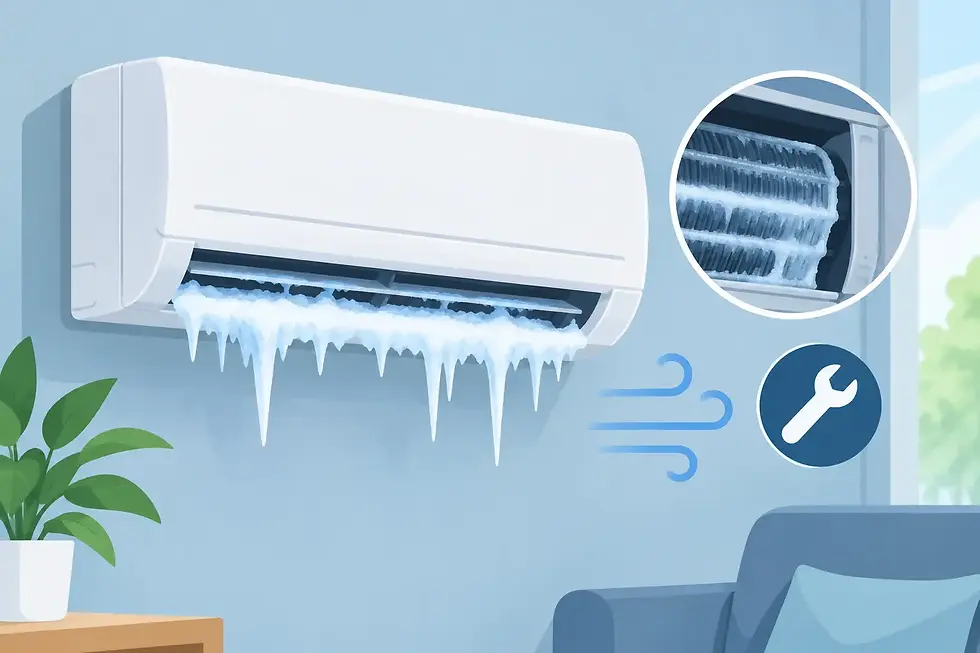
If an existing unit has weak airflow, leaks water indoors, trips the breaker, smells musty, or makes grinding and banging sounds, do not simply turn it up and hope for the best. Some problems are repairable, such as a clogged drain path, dirty coils, worn fan components, or a control issue. Others point to equipment that has reached the end of its useful life.
Replacement is often the better value when an older unit needs repeated repairs, cannot keep up during hot weather, or has become excessively loud. For owners planning a renovation, moving from multiple window units to a ductless system may also improve appearance, comfort, and long-term control over energy use.
A qualified HVAC technician can diagnose the problem, review your apartment's layout, and explain the options without pushing equipment that does not fit the property. Cozy Air Conditioning helps NYC residents make those decisions with practical recommendations, careful installation, and support when comfort cannot wait.
The right apartment air conditioner should feel almost unnoticeable: steady cooling, manageable energy use, safe installation, and a quieter place to come home to when the city is at its hottest.


Comments