

How to Prevent AC Leaks in NYC Buildings
A small puddle beneath an indoor AC unit can become a damaged ceiling, warped flooring, mold growth, or an upset downstairs neighbor surprisingly fast. Knowing how to prevent AC leaks is especially valuable in New York City, where air conditioners often run hard through humid summers and drainage lines may pass through tight walls, ceilings, or shared building spaces.
Most water leaks are preventable. They usually start with a clogged condensate drain, a dirty filter, poor installation, or a maintenance issue that was easy to correct before it caused damage. The key is to keep the system draining properly and address warning signs before the water has somewhere it should not be.
Why air conditioners leak water
Your air conditioner does more than cool the air. As warm, humid indoor air moves across the cold evaporator coil, moisture condenses on the coil and drips into a drain pan. From there, the water should flow through a condensate line to an approved drain location.
A water leak happens when that path is blocked, damaged, disconnected, or overwhelmed. In a Manhattan apartment, office, retail space, or multi-story property, even a small drainage failure can affect more than one room or unit.
Not every AC leak is water. Refrigerant leaks are a separate concern. Refrigerant does not normally form a puddle, but a system with low refrigerant may cool poorly, freeze at the coil, or produce hissing sounds. That issue requires professional diagnosis and repair, not a refill alone.
How to prevent AC leaks before summer starts
The most effective time to prevent a leak is before the first sustained heat wave. An AC system that has been idle for months can reveal a partially blocked drain line or a weakened component when it starts operating for long hours.
Keep the condensate drain line clear
Algae, dust, rust particles, and airborne debris can build up inside a condensate drain line. Over time, the line slows down or clogs completely. Water then backs up into the drain pan and may spill into the air handler, ceiling, wall, or floor.
A qualified HVAC technician can inspect and flush the drain line during seasonal maintenance. This service is more than a quick visual check. The technician should confirm that water flows freely, the piping has the right slope, fittings are secure, and the line drains where it is intended to drain.
Avoid pouring harsh chemicals into the line unless your equipment manufacturer or HVAC professional specifically recommends it. Some products can damage components, create fumes, or leave residue that contributes to future blockages. For NYC properties with older piping or complex drainage routes, a professional cleaning is the safer option.
Replace or clean air filters on schedule
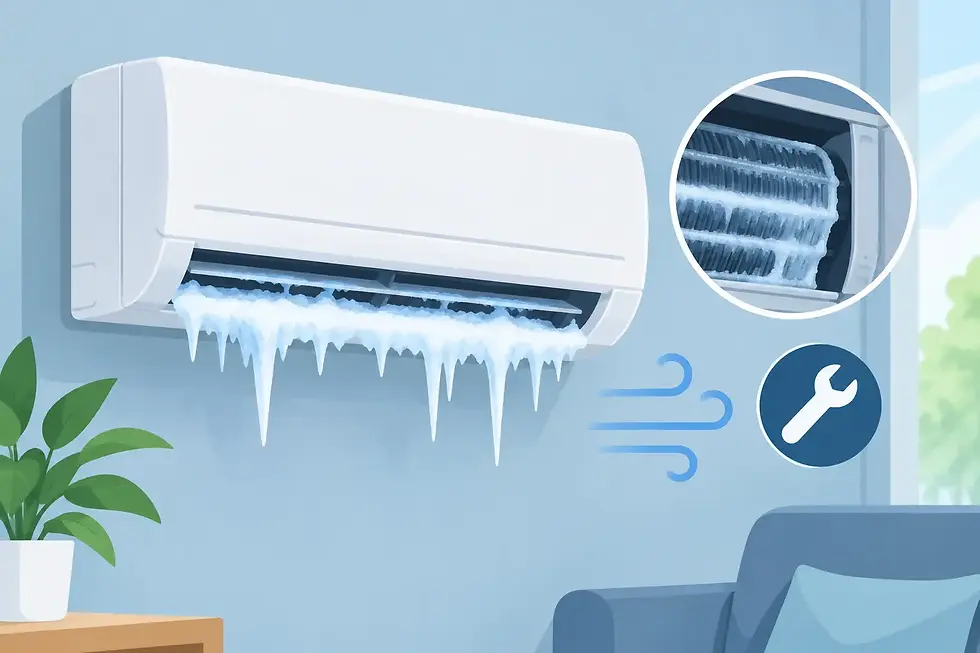
A dirty air filter restricts airflow across the evaporator coil. When airflow is too low, the coil can become cold enough to freeze. Once the ice melts, the drain pan may receive more water than it can handle, leading to an overflow.
For many homes, checking the filter monthly during cooling season is a smart routine. Replacement timing depends on the filter type, occupancy, pets, construction dust, and how often the system runs. Busy offices, restaurants, retail spaces, and buildings near high-traffic streets may need more frequent checks.
Use the filter size and efficiency rating recommended for your system. A filter that is too restrictive can create airflow problems of its own. If you are unsure which filter is right for your equipment, ask an HVAC professional during your next service visit.
Keep the evaporator coil and blower clean
The evaporator coil and blower assembly affect both cooling performance and moisture removal. Dirt on the coil acts like insulation, while buildup on the blower reduces the amount of air moving through the system. Both conditions can contribute to freezing and excess condensate.
These components are not always easy to access, particularly in concealed fan coils, rooftop units, ceiling cassettes, and equipment installed in tight NYC utility closets. Professional maintenance allows the system to be cleaned without damaging delicate coil fins, wiring, controls, or refrigerant lines.
Watch for early warning signs of a leak
AC leaks rarely appear without clues. A musty smell near a supply vent, a water stain on a ceiling, damp insulation around an air handler, or a new dripping sound can all point to a drainage problem. Do not assume the issue will resolve when the weather cools down.
Other signs include reduced airflow, ice on refrigerant lines, a unit that cycles on and off too often, or water collecting around a mechanical closet. For window units, check for water entering the room rather than draining toward the exterior. The unit should be installed with the manufacturer-approved outward pitch so condensation drains outside.
If your system has a condensate pump, listen for changes in its operation. A pump that runs constantly, makes unusual noise, or fails to activate may allow the reservoir to overflow. Pumps are small but essential components in apartments and commercial spaces where gravity drainage is not possible.
Prevent AC leaks with the right installation details
Preventive maintenance matters, but installation quality matters just as much. A new or replacement AC system should have a properly sized drain pan, correctly trapped and sloped condensate piping, secure connections, and a reliable overflow safety switch where appropriate.
A float switch can shut the system down if water rises in the drain pan. It does not eliminate the need for drain cleaning, but it can prevent a minor clog from becoming major water damage. This is particularly worthwhile for systems above finished ceilings, inside expensive apartments, or over areas with sensitive equipment and inventory.
Drain-line design depends on the equipment and building. A ductless mini-split may need a condensate pump and carefully routed tubing. A central air handler may require a trap designed for the unit's pressure conditions. Rooftop equipment may need weather-resistant drainage provisions. There is no one-size-fits-all solution, which is why system-specific installation is so important.
For property managers and commercial building operators, make sure drainage responsibilities are clear when equipment serves multiple spaces. Access panels should remain accessible, and drain components should not be hidden behind permanent finishes without a way to inspect them.
Do not ignore refrigerant leak symptoms
Water leaks and refrigerant leaks require different responses. Refrigerant is contained in a closed system, so it should not need routine topping off. If refrigerant is low, there is usually a leak that needs to be found and repaired.
Common signs include warm air from vents, longer cooling cycles, frozen coils, rising energy bills, and bubbling or hissing near the equipment. Because refrigerant work involves pressurized lines, electrical components, and regulated materials, it should be handled by a licensed HVAC professional.
Continuing to run an AC system with a refrigerant issue can damage the compressor, one of the most expensive parts of the system. Prompt diagnostics can often limit the repair and restore efficient cooling sooner.
Build AC maintenance into your property routine
For homeowners, an annual cooling tune-up is usually the right baseline. In high-use commercial, retail, industrial, or multi-unit settings, maintenance may need to be scheduled more often. The right interval depends on operating hours, equipment type, air quality, occupancy, and the consequences of downtime.
A thorough maintenance visit should include a drain inspection, filter review, coil and blower evaluation, electrical check, condensate pump test when applicable, and an assessment of overall cooling performance. It also gives you a chance to address small concerns before the hottest week of the season turns them into an emergency.
If you see active dripping, shut the system off if doing so is safe and practical, move valuables away from the area, and contact a qualified HVAC team. Do not open electrical panels or attempt to disconnect piping yourself. Fast action protects your property and helps prevent moisture from spreading into hidden materials.
Comfort should not come with water damage. A clean drain line, healthy airflow, and professional seasonal service can keep your AC running the way it should: quietly, efficiently, and without leaving a mess behind. When a leak or warning sign appears, Cozy Air Conditioning is ready to help restore normal conditions with clear diagnostics and responsive service.

Comments