

Best HVAC Maintenance Checklist for NYC Buildings
A missed filter change can turn into a hot apartment, an unhappy tenant, or an office that cannot stay productive during a Manhattan heat wave. The best HVAC maintenance checklist is not about adding chores to your calendar. It is a practical way to catch small problems before they become expensive repairs, comfort complaints, or an after-hours emergency.
New York City HVAC systems work hard. They handle humid summers, cold winters, tight equipment spaces, dust from dense streets, and long operating hours in multifamily and commercial buildings. A maintenance plan should reflect those conditions, not rely on a one-size-fits-all schedule.
Start With the Right Maintenance Schedule
Most homes and apartments benefit from professional HVAC maintenance twice a year: once before cooling season and once before heating season. For a single-system residence, that cadence catches many common issues while keeping service predictable.
Commercial spaces, restaurants, retail locations, larger residential buildings, and facilities with extended operating hours may need more frequent attention. Systems serving server rooms, medical areas, kitchens, or heavily occupied spaces often have greater cooling loads and indoor-air-quality demands. In those cases, quarterly inspections can be the better investment.
Your equipment also affects the schedule. A window unit does not require the same level of service as a central air system, boiler, heat pump, rooftop unit, VRF system, or building-wide ventilation setup. The right checklist begins with knowing what equipment you have, how old it is, and what spaces it serves.
Best HVAC Maintenance Checklist for Every Season
The following checklist separates the work a property owner or manager can safely monitor from the diagnostic and mechanical work best handled by a qualified HVAC technician. That distinction matters. Replacing a filter is simple. Working around electrical components, refrigerant, gas connections, combustion equipment, or rooftop machinery is not a DIY project.
Monthly and routine checks
Start with airflow and filtration. Inspect the air filter every month and replace it when it is visibly dirty or according to the manufacturer’s recommendation. In NYC properties, filters can load up quickly with construction dust, traffic particulates, pet hair, and everyday indoor debris. A clogged filter restricts airflow, raises energy use, and can put unnecessary strain on the blower motor and evaporator coil.
Walk through the space and listen. Note rooms that are consistently too hot, too cold, stuffy, humid, or unusually noisy. Check that supply vents and return grilles are open and not blocked by furniture, boxes, curtains, or tenant belongings. These observations give your technician a useful starting point and may reveal a balancing or ventilation issue before it affects the whole property.
For air conditioners and heat pumps, look for water around the indoor unit, drain pan, or nearby ceiling area. Condensate backups are common and should be addressed promptly. A small drip can become water damage, mold concerns, or a shutdown at the worst possible time.
Before cooling season
Before the first stretch of warm weather, have the outdoor and indoor cooling components inspected. A technician should check the thermostat’s operation, electrical connections, capacitors, contactors, blower performance, refrigerant lines, and the condition of the evaporator and condenser coils. Dirty coils make it harder for the system to transfer heat, which means longer run times and less dependable cooling.
The condensate drain and trap should be cleared and tested. This is particularly important in apartments, offices, and retail spaces where an overflowing drain can damage finished ceilings, walls, inventory, or neighboring units.
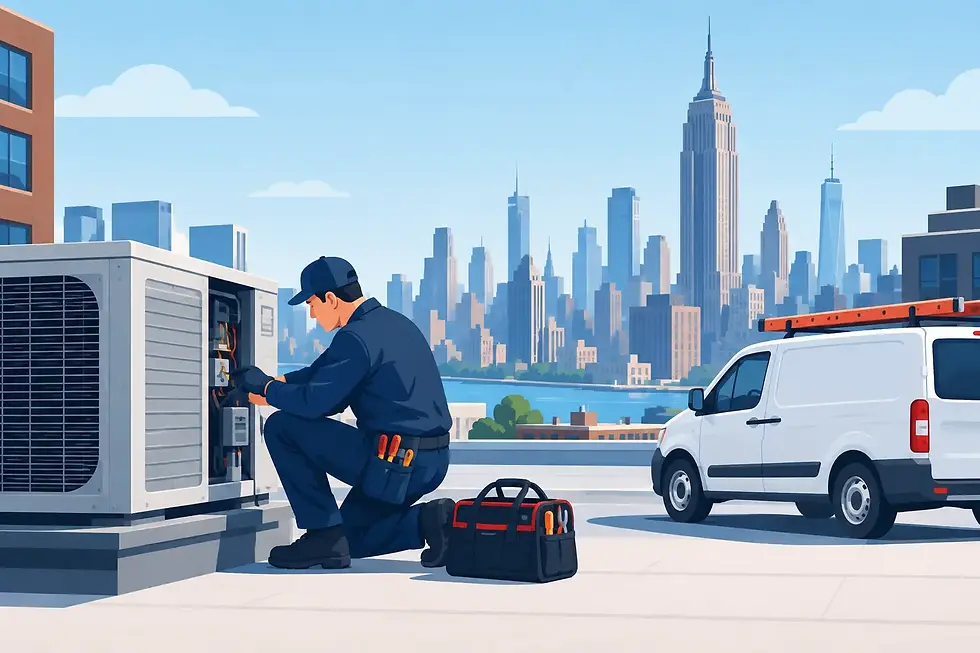
Outdoor equipment needs clearance for proper airflow. Remove loose debris and make sure landscaping, stored materials, or building trash have not crowded the condenser. For rooftop units, access, panel security, mounting condition, and weather exposure deserve attention as well. Roof work should be left to trained professionals with the proper safety procedures.
If your system uses cooling towers, chilled water, or more complex commercial controls, the checklist needs to be more detailed. Those systems should be maintained according to manufacturer requirements and building operating conditions, with careful attention to water treatment, pumps, controls, and seasonal startup.
Before heating season
Heating maintenance should focus first on safety. For furnaces and other combustion equipment, a professional should inspect burners, ignition components, heat exchangers, venting, gas connections, safety switches, and carbon monoxide risks. A heat exchanger problem is not something to postpone, even if the unit still appears to be heating normally.
Test the thermostat before cold weather arrives. Confirm it changes modes correctly, follows the programmed schedule if applicable, and communicates with the equipment as intended. A faulty thermostat, loose wire, or control issue can look like a major heating failure when the fix is relatively straightforward.
For heat pumps, the technician should check both heating and cooling operation because the system performs both jobs. Defrost controls, refrigerant performance, auxiliary heat, outdoor coil condition, and electrical components all affect winter reliability.
Buildings with boilers need their own preventive plan. That can include checking pressure and temperature controls, pumps, valves, expansion components, piping, combustion operation, venting, and signs of leaks or corrosion. Boiler maintenance is especially important in NYC, where a heating interruption can affect many residents and require an urgent response.
Ventilation and indoor air quality checks
Comfort is not only about temperature. In tightly built apartments and busy commercial spaces, ventilation can influence odors, humidity, allergens, and how fresh a room feels. During maintenance visits, ask for an assessment of ventilation performance, outdoor-air intake components, exhaust operation, and duct conditions when applicable.
Bathrooms, kitchens, laundry areas, and commercial spaces may need particular attention. Exhaust fans that do not work properly can trap moisture and odors. On the other hand, bringing in more outdoor air is not always the answer if the system cannot condition it correctly. The right solution depends on the space, occupancy, equipment capacity, and the issue you are trying to solve.
If family members, tenants, or employees report recurring dust, odors, headaches, or uneven humidity, do not assume a new filter alone will solve it. A professional diagnosis may point to filtration upgrades, duct leakage, drainage issues, ventilation imbalances, microbial growth, or an unrelated building condition.
What a Professional Tune-Up Should Include
A thorough service appointment is more than a quick glance at the unit. The technician should inspect equipment condition, test operating performance, verify electrical and safety components, clean accessible areas that affect efficiency, and identify repairs before they cause a complete failure.
For cooling equipment, that typically includes checking temperature split, refrigerant-related performance indicators, airflow, coils, drains, fan motors, and electrical components. For heating equipment, it includes combustion and safety checks where relevant, as well as airflow, controls, blower operation, and venting. The exact scope changes by system type, which is why generic maintenance promises are not enough.
Ask for clear findings after the visit. You should understand what was checked, what was cleaned, what needs monitoring, and which repairs are urgent versus optional. Property managers also benefit from keeping service reports by unit or equipment asset. Those records help with budgeting, warranty documentation, recurring issue tracking, and replacement planning.
Know When Maintenance Has Become a Repair Call
Preventive service reduces surprises, but it cannot eliminate every failure. Call for professional help promptly if you notice burning smells, gas odors, repeated breaker trips, ice on refrigerant lines, loud grinding or banging, weak airflow, a sudden spike in utility costs, or water leaking from HVAC equipment.
Do not keep resetting a system that trips or shuts down repeatedly. That can worsen the underlying issue and, in some cases, create a safety concern. Turn the equipment off if it is safe to do so, protect the area from water damage, and arrange service.
For landlords and building operators, communication matters just as much as the mechanical fix. Encourage residents and staff to report comfort changes early rather than waiting until a system stops completely. Early reports often allow repairs to happen during normal hours with less disruption and lower cost.
Make the Checklist Work for Your Property
The most useful checklist is one people will actually follow. Put filter dates on the calendar, assign responsibility for visual checks, and schedule seasonal professional service before the first major temperature swing. Keep equipment access clear and save maintenance records in one location.
Cozy Air Conditioning helps NYC homeowners, property managers, and businesses build maintenance plans around their actual equipment and comfort needs, from routine inspections to urgent diagnostics when conditions change fast. A little attention before the season starts can protect the people who rely on your space to feel safe, comfortable, and ready for the day.

Comments