
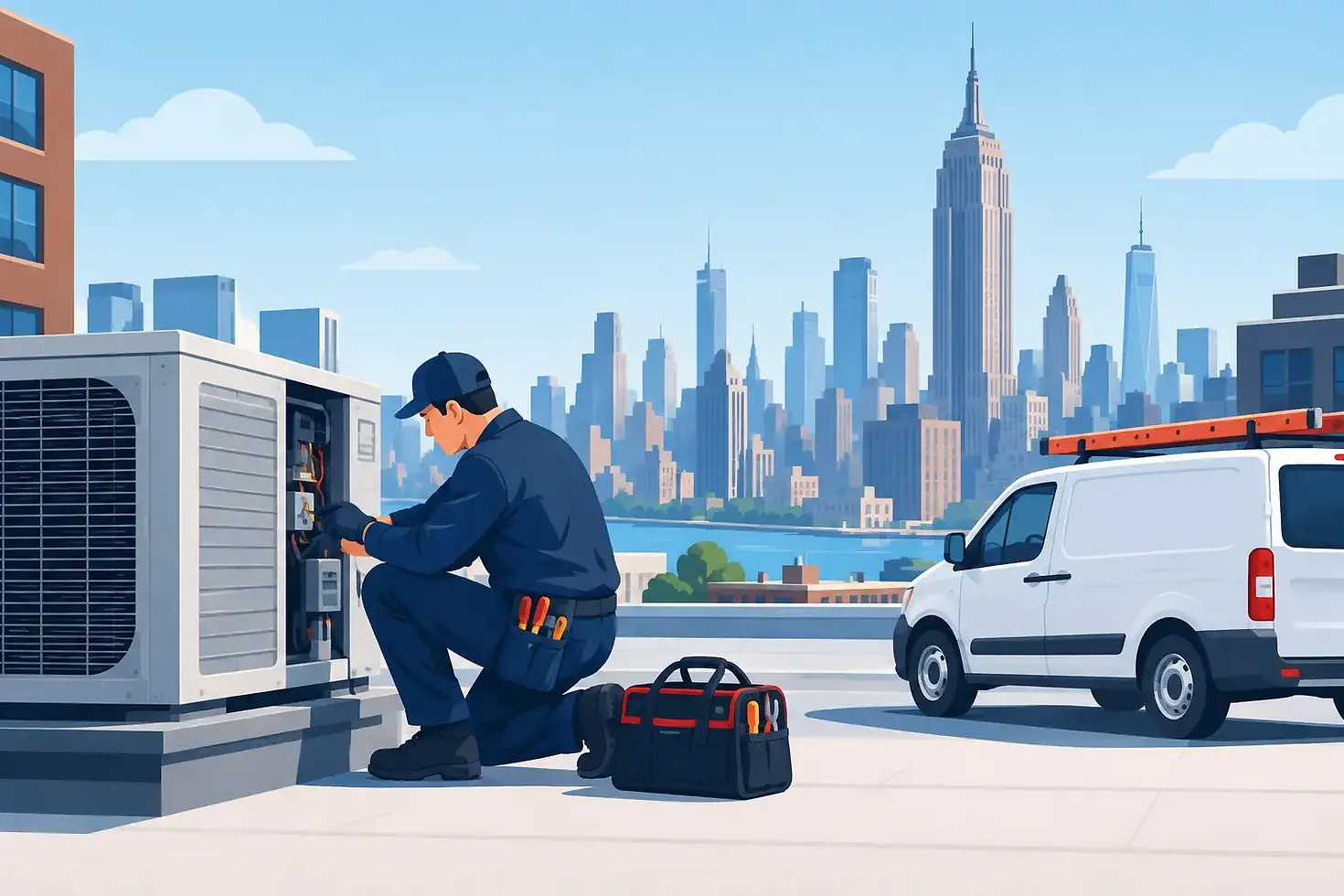
Emergency HVAC Response Guide for NYC Buildings
A failed air conditioner during a Manhattan heat wave or a heating outage on a freezing night can change from uncomfortable to urgent fast. This emergency HVAC response guide helps NYC homeowners, residents, property managers, and business operators make safe decisions before help arrives, limit property damage, and get the right repair moving without unnecessary delay.
Start With Safety, Not the Thermostat
Some HVAC problems are service calls. Others require immediate action to protect people and property. If you smell gas, see smoke, notice sparks, hear loud electrical buzzing, or suspect carbon monoxide exposure, do not try to troubleshoot the equipment. Leave the affected area, alert other occupants when it is safe to do so, and contact emergency services or the appropriate utility provider.
Carbon monoxide deserves special attention during a heating emergency. Headache, dizziness, nausea, confusion, or unusual fatigue can be signs of exposure, especially when several people in the building feel ill at once. Move into fresh air immediately. A working carbon monoxide detector is one of the most valuable safeguards in any apartment, home, office, or mechanical room.
Water around HVAC equipment is another situation that needs a careful response. Shut off power to the unit at the thermostat or breaker only if it can be done safely and without stepping in water. A clogged condensate drain may be relatively straightforward, but water near electrical components, a ceiling leak, or a rapidly growing puddle needs professional attention.
Emergency HVAC Response Guide: First 15 Minutes
Once there is no immediate threat to life safety, focus on stabilizing the situation. You do not need to diagnose the entire system. A few observations can help an HVAC technician arrive prepared and reduce the chance of further damage.
First, check whether the issue affects one room, one apartment, one floor, or the whole building. A single room that will not cool may point to an airflow, thermostat, PTAC, or duct issue. A building-wide outage could involve central equipment, controls, fuel supply, electrical service, or a shared boiler or condenser system.
Then look at the thermostat. Confirm that it is set to heat or cool, the temperature setting calls for operation, and the batteries are working if the thermostat uses them. If the screen is blank, avoid assuming the thermostat itself is the only problem. A tripped breaker, safety switch, or power interruption may be involved.
If the system is running but not performing, note what you see and hear. Is warm air coming from supply vents when cooling is selected? Is the furnace or boiler cycling on and off? Is there ice on refrigerant lines? Is a rooftop unit making a new grinding sound? Clear details are more useful than repeated resets.
Avoid turning the system on and off over and over, forcing a breaker back on, or opening sealed electrical panels. Those steps can turn a minor fault into equipment damage or an electrical hazard. If a breaker trips again after one reset, leave it off and arrange service.
Protect the Building While You Wait
In New York City, HVAC emergencies often involve more than comfort. They can threaten pipes, inventory, equipment, tenant satisfaction, and normal business operations. The right temporary measures depend on the season and the type of property.
During a cooling failure, close blinds or shades on sun-facing windows, limit use of ovens and heat-producing equipment, and keep exterior doors closed. For offices, retail spaces, and server rooms, move people or heat-sensitive equipment away from the warmest area when possible. Portable fans can improve circulation, but they do not solve dangerous indoor temperatures. Check on older adults, infants, pets, and anyone with a medical condition that makes heat harder to tolerate.
During a heating failure, keep interior doors open enough to distribute any available heat, close windows tightly, and move vulnerable occupants into a warmer part of the property. In homes and apartments with plumbing on exterior walls, open cabinet doors under sinks so warmer room air can reach the pipes. Never use an oven, grill, or unvented combustion appliance to heat an occupied space. Space heaters require caution too: plug them directly into a wall outlet, keep them clear of fabric and furniture, and never leave them unattended.
For commercial and industrial properties, document the indoor temperature, affected areas, alarms, product concerns, and any temporary actions taken. This record helps building leadership make decisions and gives the service team a better starting point.
What to Tell Your HVAC Technician
Fast service begins with accurate information. Before calling for emergency repair, gather the building address, unit or suite number, access instructions, and a reliable on-site contact. If the equipment is in a locked roof area, basement, mechanical room, or ceiling plenum, make sure someone who can provide access is available.
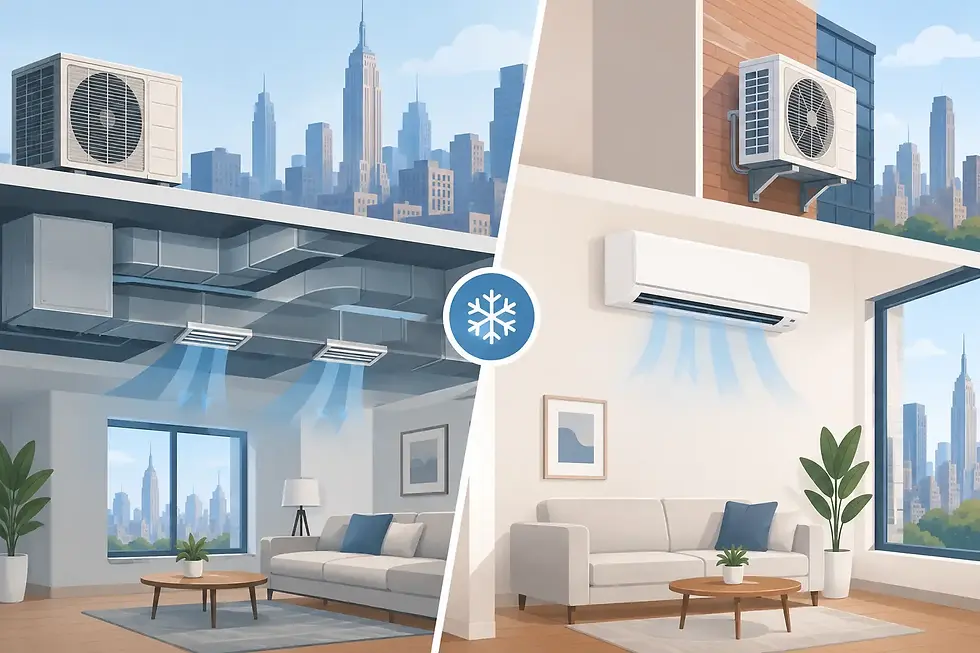
Describe the equipment if you can: central air system, ductless mini-split, PTAC unit, furnace, boiler, heat pump, rooftop unit, make-up air unit, or ventilation system. The model number is helpful but not required. A photo of the thermostat display, visible error code, water leak, or iced line can also speed up the diagnostic process.
Share when the problem began and what changed beforehand. Maybe cooling weakened gradually over several days. Maybe the heat stopped after a power interruption. Perhaps maintenance work was recently completed, a filter was changed, or construction dust entered the area. These details do not replace diagnostics, but they help narrow the possibilities.
A dependable emergency technician should explain the findings in plain language, identify any immediate safety or property risks, and distinguish between a repair that can be completed now and one that requires a part, further testing, or a larger replacement plan. In a dense NYC building, access restrictions, building rules, roof permits, and equipment location can affect timing. Clear communication matters as much as technical skill.
Common NYC HVAC Emergencies and What They May Mean
A system that blows air but does not cool can have several causes, including a dirty filter, frozen evaporator coil, refrigerant issue, failed capacitor, condenser problem, or control malfunction. Continuing to run a frozen system can cause more damage, so turn cooling off if ice is visible and wait for professional guidance.
No heat may result from a thermostat issue, boiler or furnace fault, ignition failure, fuel interruption, circulation problem, or a safety control that has shut the equipment down. In multifamily buildings, the source may be within an individual unit or part of a shared system. Property managers should determine the extent of the outage early, then communicate realistic updates to residents.
Poor airflow is not always an emergency, but it can become one in high-occupancy spaces or areas with sensitive equipment. A blocked filter, failed blower motor, damaged belt, closed damper, or dirty coil may be restricting air movement. If the problem comes with burning odors, overheating, or a blower that will not stop running, shut the system down and request service.
Water leaks are especially disruptive in apartments and commercial interiors. Condensate backups, drain line blockages, frozen coils, damaged pumps, and roof-related issues can all send water where it does not belong. Protect nearby furnishings and electronics if it is safe, but do not remove panels or attempt repairs around energized equipment.
Prevent the Next After-Hours Call
Emergency repairs are sometimes unavoidable, particularly when equipment is aging or weather is extreme. Still, many failures give warning signs first: uneven temperatures, rising utility costs, unusual sounds, short cycling, recurring drain problems, or filters that clog faster than expected.
Seasonal maintenance gives a technician time to clean critical components, test controls, inspect electrical connections, verify drainage, evaluate airflow, and identify worn parts before they fail at the worst possible moment. For buildings with multiple systems, a documented maintenance schedule also helps property teams budget for repairs and plan replacements around occupancy needs.
Cozy Air Conditioning provides 24/7 emergency support for NYC properties when comfort, safety, or operations cannot wait. The goal is not just to get equipment running again. It is to understand why it failed, protect the system from repeat damage, and help you make a clear next decision.
When your HVAC system sends a warning sign, act before a small disruption becomes an overnight emergency. A timely call, good notes, and a safety-first response can protect the people and places that depend on your building every day.


Comments